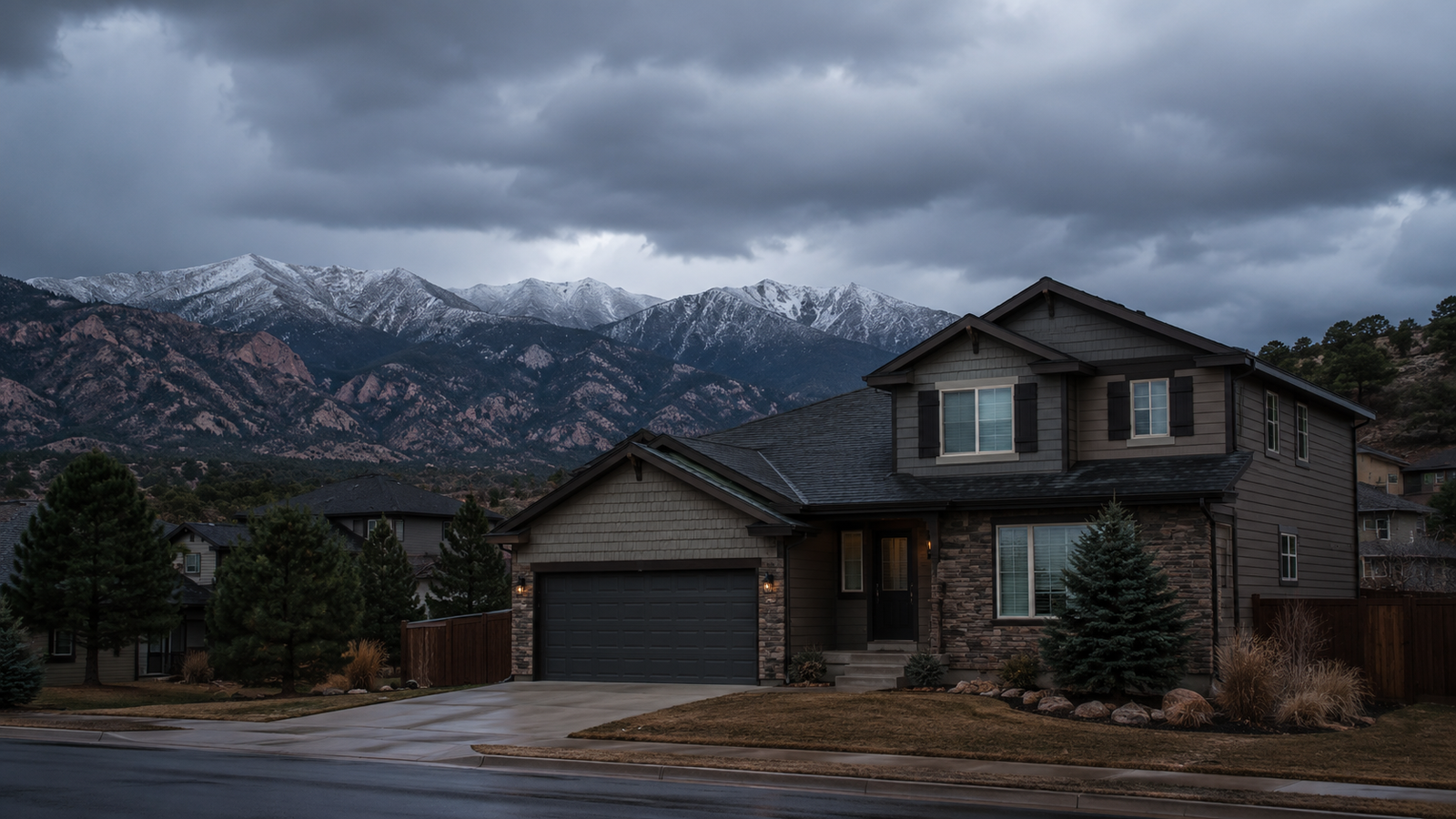
Colorado Springs consistently ranks as one of the sunniest cities in the United States, with over 300 days of sunshine per year and average annual humidity below 40 percent. So when homeowners discover mold in their basement, crawl space, or behind their bathroom wall, the first reaction is often confusion. This is Colorado — it’s dry here. How does mold survive, let alone thrive?
The answer lies in a set of climate and construction factors specific to the Front Range that create localized moisture conditions even in an overall dry environment. Understanding these factors helps Colorado Springs homeowners recognize their actual mold risk — which is higher than the general climate statistics suggest.
Freeze-Thaw Cycles Are the Primary Driver
Colorado Springs averages 48 freeze-thaw cycles per year — days when temperatures cross the 32-degree threshold in both directions. This is more than almost any other city in the country at a comparable elevation. Each freeze-thaw cycle stresses plumbing systems, building envelopes, and foundation materials in ways that accumulate over time. Metal pipes expand and contract, developing micro-fractures that eventually become slow leaks. Caulking around windows and penetrations shrinks and fails. Foundation cracks that are hairline in summer open measurably in winter. Each of these failure points is a potential moisture entry pathway into your home.
Snowpack Creates a Six-Month Moisture Source
Colorado Springs receives 40 to 50 inches of snow annually, and that snowpack can persist in shaded areas — north-facing slopes, under decks, against foundation walls — from November through April. Six months of snow against your foundation means six months of ground moisture migrating toward your basement walls, crawl space floor, and slab edges. This sustained moisture exposure is fundamentally different from a rain event, which dries within days. Snowpack moisture is slow, continuous, and cumulative.
The Palmer Divide Effect
Colorado Springs sits at the southern edge of the Palmer Divide — a topographic ridge that separates the South Platte River drainage to the north from the Arkansas River drainage to the south. This terrain feature funnels moisture-laden air from both mountain ranges and creates localized weather patterns including sudden thunderstorms, heavy snow events, and fog that other Colorado cities at similar elevation don’t experience. The Palmer Divide effect is why Colorado Springs receives significantly more precipitation than Denver despite being at nearly the same elevation.
Altitude Changes How Buildings Breathe
At 6,035 feet, atmospheric pressure is approximately 80 percent of sea-level pressure. This reduced pressure affects how buildings manage vapor — moisture moves differently through building assemblies at altitude, and many building science principles developed at sea level don’t apply directly. Vapor barriers that perform adequately at sea level may be insufficient for the pressure differentials that exist at Front Range elevations, particularly in older homes designed without altitude-specific considerations.
Older Neighborhoods, Older Standards
Colorado Springs’ older neighborhoods — Old Colorado City, the Westside, Ivywild, Patty Jewett, Prospect Lake — contain significant housing stock from before vapor barriers were required, before modern plumbing materials were standard, and before insulation requirements reflected actual climate demands. These homes were built for a construction era that didn’t account for what six decades of Front Range freeze-thaw cycling would do to their building envelopes. Mold in these properties isn’t a sign of neglect — it’s a predictable consequence of aging infrastructure meeting a demanding climate.
What Homeowners Can Do
The most effective prevention strategies for Colorado Springs homes are consistent moisture monitoring in high-risk areas — basement walls, crawl spaces, and attic assemblies — ideally with inexpensive humidity sensors; prompt repair of any plumbing issues regardless of how minor they appear; and professional mold inspection if you notice musty odors, visible discoloration, or unexplained respiratory symptoms in household members.
If you suspect mold in your Colorado Springs home, call or text Front Range Mold Pros at 719-521-5894 for a certified inspection. Learn more about mold inspection costs and process or get a Colorado Springs mold remediation cost estimate.